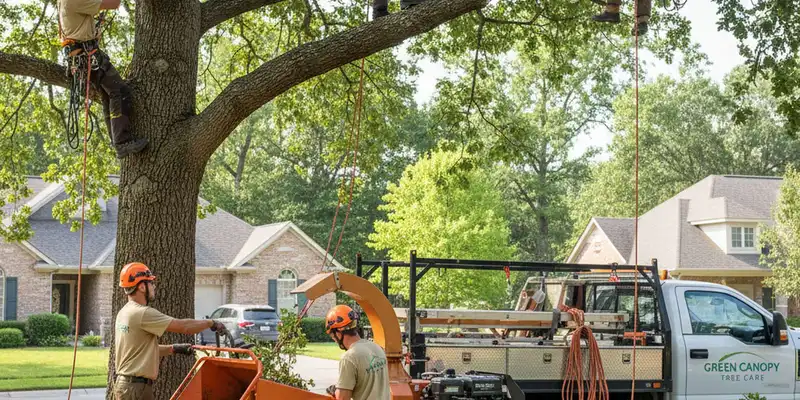
Fairchild Air Force Base is set on the high plains west of Spokane, where tightly arranged military housing, open lots exposed to the wind, and older stands of ponderosa pine and cottonwood shape the local landscape. Properties here deal with steady wind pressure, compacted soil from years of vehicle traffic, and crowded canopy conditions near housing corridors. Our network of tree care professionals in Spokane knows how to evaluate wind-damaged limbs, address soil compaction around root systems, and clear overgrown branches from properties that need to stay safe and accessible through the region's demanding seasons.
That is why more property owners in Fairchild Air Force Base, WA, are turning to Arbor Tree Care for dependable year-round maintenance.

Prefer to Talk to An Expert?
(509) 823-1030
Why Fairchild Air Force Base Property Owners Trust Local Professionals to Get It Right
Because these professionals work in and around the area, they understand the wind-prone terrain, dense housing layouts, and aging conifer canopy that make this neighborhood unique. Every service is matched to the conditions found on Fairchild Air Force Base properties, with equipment and methods selected for compacted soil, tight access points, and storm-related limb failure common across this part of Spokane.
From professional stump removal solutions near the main gate corridors along Rambo Avenue to canopy thinning around family housing clusters off Arnold Street, each job is completed with careful planning and long-term property maintenance in mind.
If you take pride in your property, local contractors can help keep it orderly, stable, and safe in Fairchild Air Force Base.
Our Tree-Service Services
in Spokane, WA, Include
A Service Area Designed to Fit Your Fairchild Air Force Base Neighborhood
Small lot sizes and limited access points in base housing and nearby residential areas call for tree service solutions that are tailored, not generic. Local professionals adapt their work to the many property layouts found across the base and in the surrounding corridors.
Whether the project is at a military family housing unit in the Westgate residential area, a privately owned home in the off-base neighborhoods along Craig Road, or a commercial property near the main installation entrance on Rambo Avenue, the approach stays specific to the site.
From expert tree pruning services and shrub removal to tree planting and landscape design, services are planned around the neighborhood's look and the needs of each property.
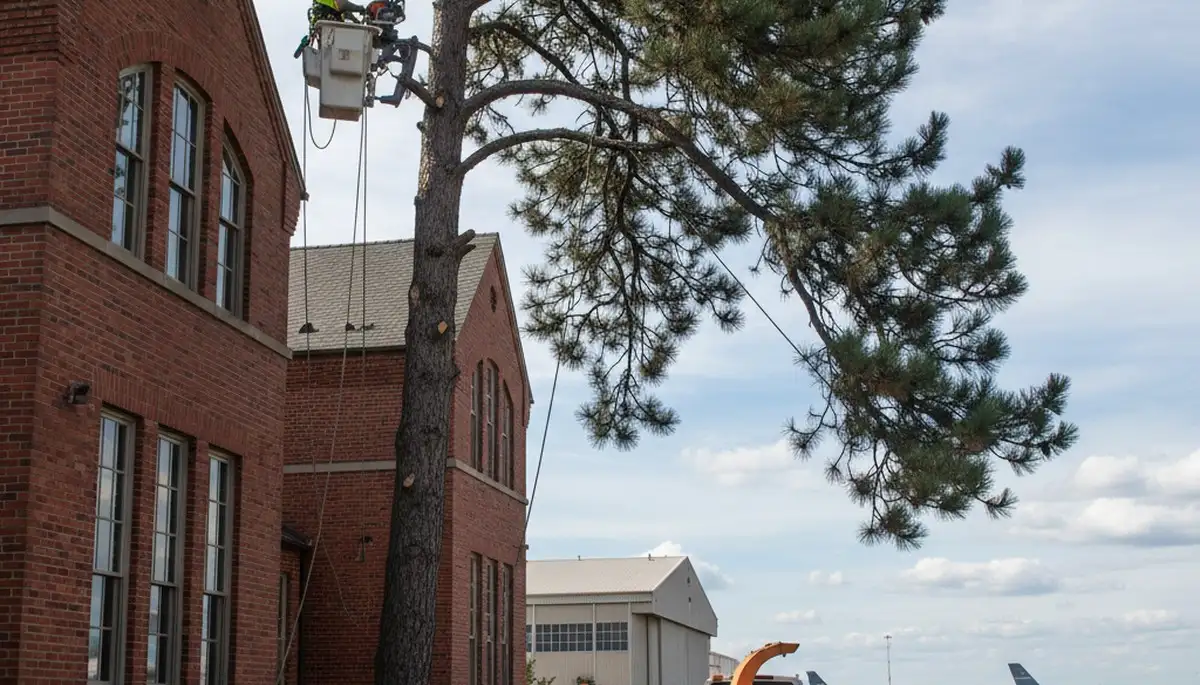
Fairchild Air Force Base's Wind-Stressed Canopy, Rooted in History
Fairchild Air Force Base has been an active military installation since World War II, and its residential and operational areas have expanded across the open terrain west of Spokane over time. That history is still visible in the aging canopy, compacted utility corridors, and wind-battered ponderosa pines that shape tree care needs here today.
Persistent Wind Stress and Structural Limb Failure
Many properties in Fairchild Air Force Base, especially older family housing areas near Arnold Street and perimeter zones along Craig Road, face regular wind loading that weakens scaffold limbs and creates unpredictable failure points. The result can be hazardous overhanging branches and split crotch formations that create access and safety concerns along driveways and pedestrian routes.
Local professionals address these weaknesses with selective crown reduction, targeted limb removal, and cabling when appropriate, helping reduce long-term access problems and liability on both base and off-base residential properties.
Compacted Soils and Root Zone Deterioration
Decades of vehicle traffic and dense housing development on the base have compacted soil in many residential and transitional zones, limiting root function and moisture absorption. Shallow root spread can weaken tree anchoring and increase the chance of windthrow during Spokane's seasonal storms.
Professionals handle these conditions with aeration-compatible root protection methods, targeted reliable root protection services, and soil decompaction techniques that work around utilities and paved surfaces.
Aging Ponderosa Pine and Cottonwood Decline
After years of drought cycles and limited supplemental irrigation, many Fairchild Air Force Base conifers and broadleaf trees are showing reduced structural strength and declining foliage health.
Trusted pros support these landscapes with tree fertilizing programs, disease monitoring, and timely dead wood removal, helping extend canopy life and reduce fire risk in eastern Washington's dry climate.
Seasonal Storm Damage from High-Wind Events
Seasonal wind events in eastern Washington can bring strong gusts and sudden downdrafts that lead to limb failure and whole-tree movement across base housing and nearby neighborhoods.
Experienced crews respond quickly with aerial lift equipment, ground rigging systems, and debris clearing protocols to restore access and utility clearance after storms, which are common across the Spokane West Plains corridor. Residents near tree trimming services in Airway Heights, WA face similar wind exposure just a few miles east along US-2.
Restricted Access in Compact Housing Zones
Narrow driveways, low overhead clearance, and closely spaced homes are common in Fairchild Air Force Base, which makes staging equipment and removing debris more challenging without coordination.
Local pros rely on compact aerial lifts and hand-climbing methods, keeping ground disturbance low and debris management safe for neighboring properties. Communities to the southeast, including those looking for tree removal contractors in Medical Lake, WA, deal with similar access concerns in older residential corridors.
For ideas on how to keep your Fairchild Air Force Base property maintained year-round, request a free quote from a local professional in Fairchild Air Force Base by calling (509) 823-1030.
Every property deserves safe access. Let Arbor Tree Care help you maintain it!

Kick off your tree service project today!
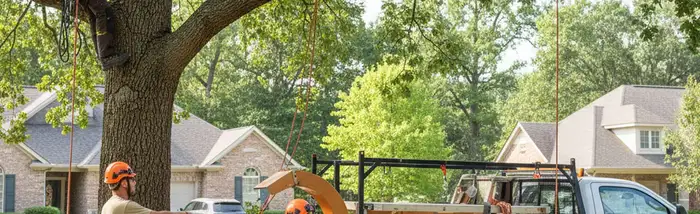
Tree Services in Fairchild Air Force Base, WA: Care for Every Season
From routine canopy maintenance to emergency storm response, here is how local pros keep properties structurally sound, visually clean, and hazard-free throughout the year:
Routine Tree Trimming and Pruning in Fairchild Air Force Base, WA
- Crown thinning for ponderosa pines along the windward perimeter near Craig Road to lower wind resistance and reduce limb failure risk during the high-wind events common on the Spokane West Plains.
- Structural pruning of cottonwood and poplar trees in family housing areas off Arnold Street, with attention to co-dominant leaders and weak branch attachments before spring storm season.
- Clearance trimming around overhead utility lines in older base housing corridors to maintain safe separation between tree canopy and power infrastructure.
- Seasonal shape pruning for ornamental trees and shrubs in residential front yards to support curb appeal and property standard compliance throughout base housing zones.
- Canopy elevation for trees near base entry roads and pedestrian walkways to improve visibility and allow safer vehicle and foot traffic across the installation.
Plan trimming and pruning ahead of Spokane's late-fall winds to reduce storm damage risk and keep base housing properties safe and compliant.
Tree Removal Services in Fairchild Air Force Base, WA
- Hazardous tree removal for wind-damaged or structurally compromised ponderosa pines leaning toward base housing, driveways, or access roads.
- Dead tree removal for drought-stressed cottonwoods and elms in off-base residential zones along Rambo Avenue and the surrounding Craig Road corridor.
- Storm-damaged tree removal after high-wind events, including split trunks, uprooted root plates, and fallen canopy sections from driveways and common areas.
- Removal of diseased trees showing fungal canker, bark beetle activity, or advanced wood decay that weakens structural stability near occupied buildings.
- Whole-tree removal in tight housing zones using sectional felling and crane-assisted rigging to protect nearby structures and landscaping during the job.
Removing dead or damaged trees quickly lowers liability, restores safe access, and helps prevent additional harm to fencing, structures, and nearby vegetation.
Stump Grinding and Cleanup in Fairchild Air Force Base, WA
- Stump grinding for remaining ponderosa pine stumps in base housing yards to reduce tripping hazards and reclaim lawn and landscape space.
- Below-grade grinding for stumps near driveways and walkways so the surface stays flush for mowing, foot traffic, and future improvements.
- Root flare cleanup after stump removal to address exposed roots that can wear down pavement edges and damage lawn equipment over time.
- Debris hauling and site cleanup after stump grinding so residential and transitional properties are left neat and ready for replanting or lawn restoration.
- Coordination with property managers and base housing offices for multi-stump grinding projects across shared green spaces and common plantings.
Prompt stump removal helps prevent regrowth, reduces fungal entry points, and returns clean sightlines and usable outdoor space across Fairchild Air Force Base residential properties throughout the growing season.
Emergency Tree Services in Fairchild Air Force Base, WA
- Fast response to fallen trees blocking base access roads, driveways, and housing entries after high winds or severe thunderstorms.
- Emergency limb removal for hanging or partially attached branches that threaten occupied buildings, parked vehicles, and pedestrian routes across the installation.
- Storm damage assessment and priority triage for multiple trees in base housing clusters, separating immediate hazards from work that can wait.
- After-hours emergency response for wind-related tree failures in off-base neighborhoods along Craig Road and nearby Spokane West Plains residential corridors.
- Post-storm debris clearing and site stabilization to restore safe access and limit secondary hazards after major weather events in the Fairchild Air Force Base area.
Emergency crews who know Fairchild Air Force Base access protocols and housing layouts can respond efficiently, reduce disruption, and restore safe conditions as soon as possible after storms.